Table of Contents
A stroke can change a person’s life in an instant, affecting how they move, communicate, and perform everyday activities. While medical treatment is the first step in stabilizing stroke patients, rehabilitation therapies play a critical role in recovery and helping survivors regain independence and rebuild their quality of life.
Three of the most important rehabilitation services used after a stroke include physical therapy, occupational therapy, and speech therapy. They all focus on different aspects of recovery but work together to support patients’ overall progress.
Understanding Strokes
A stroke occurs when blood flow to part of the brain is interrupted or reduced, preventing brain tissue from receiving oxygen and nutrients. Within minutes, brain cells can begin to die. Strokes can be caused by a blood clot blocking a blood vessel (ischemic stroke) or a blood vessel in the brain breaking or tearing (hemorrhagic stroke).
Depending on which area of the brain is affected, a stroke may lead to weakness or paralysis on one side of the body, difficulty speaking or understanding language, problems with balance or coordination, memory or cognitive difficulties, blurry vision, or trouble swallowing or eating. Stroke patients may also pass out, have a seizure, vomit, or go into a coma.
Because strokes affect the brain’s ability to control different functions, rehabilitation therapy plays an important role in helping the body relearn lost skills.
The Role of Physical Therapy After a Stroke
Physical therapy focuses on restoring strength, movement, and balance. Many stroke survivors experience weakness or paralysis on one side of the body, which can make walking, standing, or even sitting difficult.
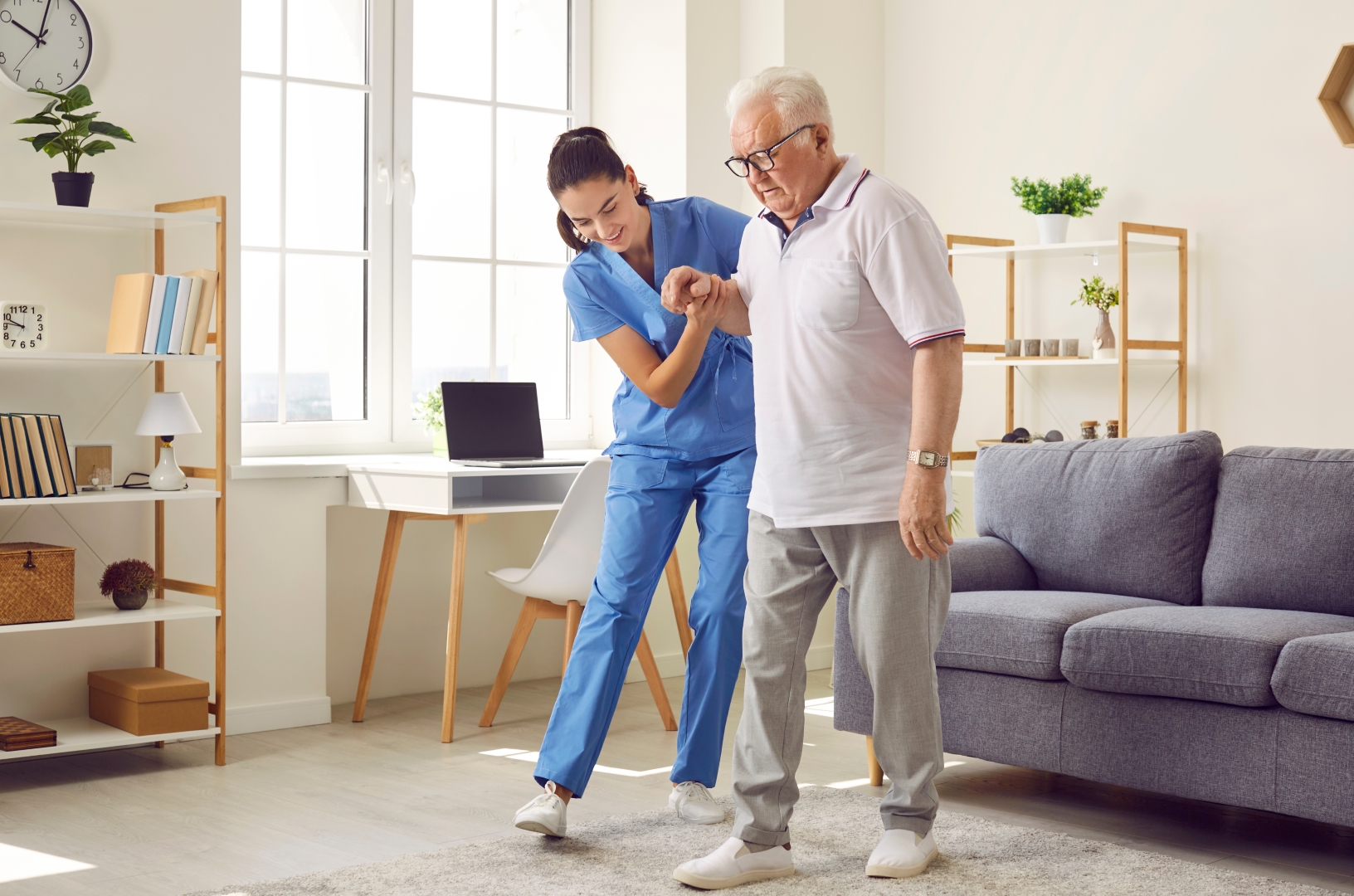
A physical therapist works with patients to rebuild mobility and improve safety through targeted exercises and movement training. They strive to improve muscle strength and coordination, restore balance and stability, increase endurance and flexibility, and prevent muscle stiffness and joint problems. They can also help survivors learn to walk again.
Therapists will guide patients through stretching, strengthening exercises, and gait training. They may also encourage the use of assistive devices, such as walkers, canes, or braces, to help improve mobility and reduce the risk of falls.
How Occupational Therapy Supports Daily Living
Occupational therapy focuses on helping stroke survivors regain the ability to complete everyday activities. After experiencing a stroke, tasks that once seemed simple, like getting dressed, preparing food, or brushing teeth, can become difficult.

An occupational therapist can help patients relearn daily skills by:
- Practicing dressing, grooming, and bathing
- Improving hand, eye, and arm coordination
- Teaching strategies for cooking and completing household tasks
- Introducing adaptive tools and equipment
- Modifying the home environment for safety
- Restoring sensation or gross motor skills
- Restoring upper body strength, endurance, and range of motion
Occupational therapists also help patients improve fine motor skills, which are necessary for tasks like writing, buttoning, clothing, or using utensils. The goal is to help stroke survivors regain as much independence as possible in their daily routines.
Speech Therapy and Communication Recovery
Many stroke survivors experience difficulties with speaking or swallowing. Speech therapy addresses these challenges and helps patients improve their ability to communicate and eat safely.
Speech-language pathologists work with patients who may have difficulty speaking clearly, trouble finding the right words, problems understanding language, memory and cognitive communication issues, or swallowing disorders.
Therapy may involve exercises to strengthen the muscles used for speaking and swallowing, language practice, and strategies to improve communication. In some cases, therapists may introduce communication aids or alternative methods of expression.
The Importance of a Team Approach
Recovery is rarely achieved through one therapy alone. Physical therapists, occupational therapists, and speech-language pathologists often work together to create a comprehensive rehabilitation plan tailored to each patient’s needs.

For example, a patient learning to walk again in physical therapy may also work with an occupational therapist to learn how to safely navigate their home and with a speech therapist to address communication or swallowing issues. This coordinated approach ensures that all aspects of recovery are addressed.
Moving Forward After a Stroke
Recovering from a stroke takes time, patience, and consistent effort. With the help of rehabilitation therapies, many stroke survivors can regain important abilities and improve their independence. Early intervention and ongoing therapy can make a significant difference in long-term outcomes.
If you or a loved one has experienced a stroke, working with a rehabilitation team that includes physical, occupational, and speech therapists can provide you with the support and guidance you need to navigate the recovery journey and rebuild daily life.